





Fitbit Inspire 3 Review: A Slim Sleep Tracker That Covers the Basics Really Well

Key Features
Sleep Stage Tracking
Breaks your night into light, deep, and REM sleep. You get a Sleep Score each morning that’s easy to understand without a PhD in sleep science.
24/7 Heart Rate
Continuous heart rate monitoring throughout the day and night. Tracks resting heart rate trends, which is one of the better indicators of recovery quality.
Stress Management Score
Tracks body response to stress using HRV and skin temperature data. A number between 1 and 100 — higher is better.
Up to 10-Day Battery
Most users get 8-10 days per charge. You won’t need to take it off every night to charge, which matters for sleep tracking consistency.
Our Experience
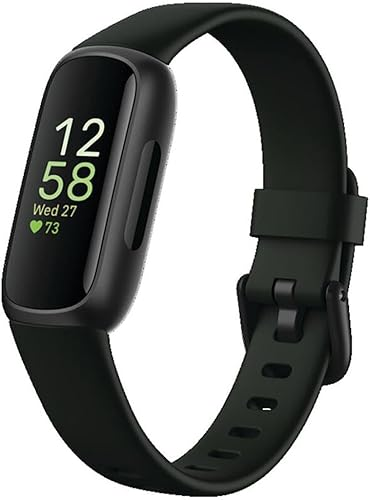
The Fitbit Inspire 3 isn’t trying to be a smartwatch. That distinction matters. It’s a sleep and health tracker in the thinnest possible package — something you can actually wear 24/7 without thinking about it. At $70, it’s one of the better-priced options in this category.
Sleep tracking is where it earns its place. The Sleep Score each morning — a number out of 100 — gives you something concrete to work with. You can see how much deep sleep you got, when your heart rate dipped, and whether your body actually recovered overnight. The data matches up well with how you feel when you wake up, which is more than you can say for some trackers.
The Stress Management Score is genuinely useful once you understand what drives it. HRV (heart rate variability) is one of the better recovery indicators, and Fitbit makes it accessible without requiring you to dig through raw data. If your score tanks after a few bad nights, you’ll see it clearly.
Battery life is solid. Eight to ten days per charge means you can track a full week of sleep without interruption, then charge it on a Sunday morning while you drink coffee. That consistency is important for sleep data accuracy.
The band is thin and light enough to forget it’s there. No clunky bezel, no awkward bulk under a sleeve. If you’ve skipped sleep trackers because you hate wearing things on your wrist at night, this one is worth reconsidering.
Pros & Cons
What We Liked
- Sleep Score is clear and actionable — not just raw data you can’t interpret
- 8-10 day battery lets you track full weeks without interrupting sleep to charge
- Thin enough to wear 24/7 without noticing it
- Stress and HRV tracking adds real context to your sleep data
Worth Knowing
- Fitbit Premium subscription ($10/month) unlocks the deeper insights — basic free tier is limited
- No GPS — relies on phone for outdoor activity tracking
Full Specifications
| Sleep Tracking | Light, deep, REM, awake stages |
| Heart Rate | 24/7 continuous |
| Battery Life | Up to 10 days |
| Water Resistance | 50m swim-proof |
| Stress Score | Yes (HRV-based) |
| GPS | Connected GPS (phone-based) |
| Price | $84.50 |
Frequently Asked Questions
Do I need Fitbit Premium to use the sleep tracking?
Is it accurate for sleep tracking?
How does it compare to the Fitbit Charge 6?
Final Verdict
The Fitbit Inspire 3 is one of the best sleep trackers at this price. Thin, long battery, real sleep stage data, and a stress score that actually tells you something. If you want to understand your sleep without wearing a chunky device or paying subscription fees for basic features, this is the one to get.
Check Price on Amazon