





You’d think buying blackout curtains would be simple. Pick dark fabric, hang it up, sleep in darkness. But if you’ve ever ordered a pair off Amazon and still woke up to a glowing room at 6am, you already know it doesnt work like that.
Most curtains marketed as “blackout” only block about 85 to 95 percent of light. That leftover 5 to 15 percent leaking around the edges and through the weave is enough to mess with your melatonin production and wake you up earlier than you want. This guide covers what actually matters when you’re shopping so you dont waste money on curtains that barely work.
Fabric Type Matters More Than Color
The biggest misconception is that dark colored curtains block more light. They dont, necessarily. What blocks light is the backing material, not the face fabric color. You can get white curtains that block 100% of light if they have the right backing.
There are three main types of blackout fabric:
Triple weave fabric has three layers woven together with a black thread in the middle. This is the gold standard. The middle layer does all the blocking work while the front and back layers handle aesthetics. These tend to be heavier and hang better, which also helps with that annoying light gap at the edges.
Foam backed fabric uses a layer of acrylic foam bonded to the back of regular curtain fabric. It works well when new but the foam can crack, peel, and degrade after a couple years of sun exposure. If you’re in a room that gets direct afternoon sun, skip foam backed.
Thermal coated fabric has a silver or white coating sprayed on the back. It does double duty blocking light and reflecting heat, which is nice for summer. The coating holds up better than foam but some cheaper versions have a chemical smell that takes weeks to off gas.
Getting the Fit Right (This Is Where Most People Fail)
You can buy the most expensive triple weave curtains on the market and they wont do much if light pours in around the sides and top. Fit is everything.
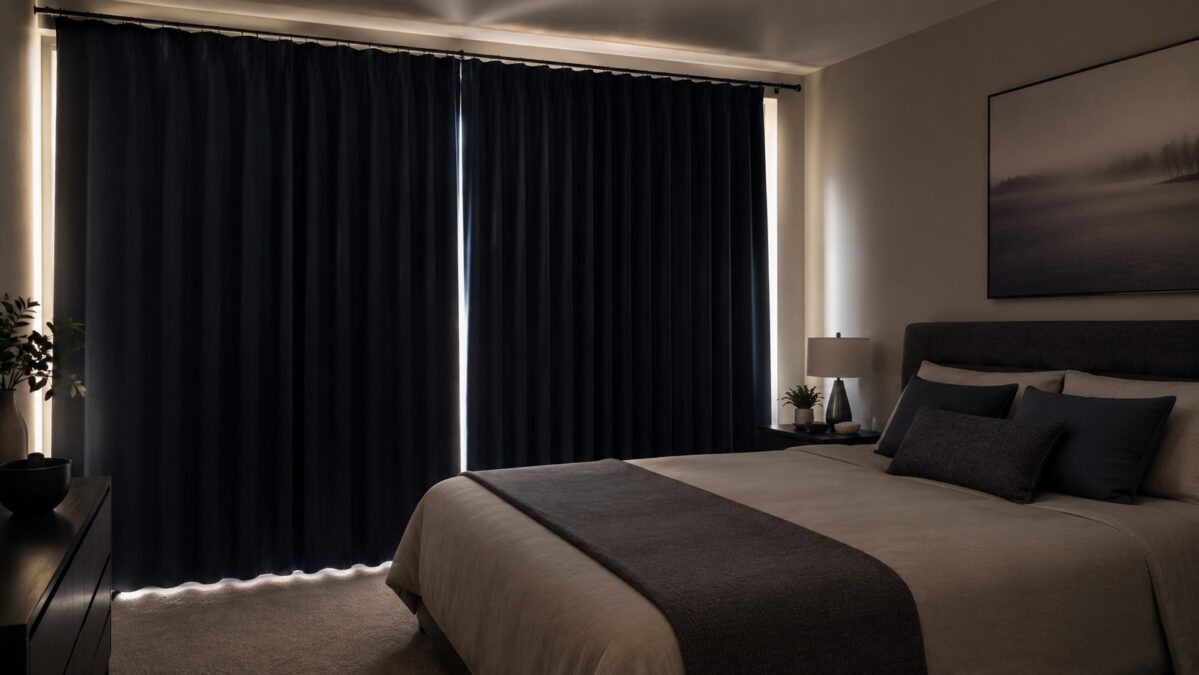
Mount your rod 4 to 6 inches above the window frame and 3 to 6 inches wider on each side. This creates enough overlap that the curtain covers the entire window opening plus the gap where light sneaks in. Ceiling mounting works even better if your room allows it.
For width, each curtain panel should be 1.5 to 2 times the width of the window it covers. Sounds like a lot of extra fabric but thats what creates the fullness that eliminates light gaps when the curtains are closed. Panels that are exactly window width just hang flat and leave gaps at every fold.
The bottom matters too. Curtains that stop at the windowsill leave a huge light gap underneath. You want them to hit the floor or even puddle slightly. That extra inch or two of fabric pooling on the ground creates a light seal that shorter curtains cant match.
Grommets vs Rod Pocket vs Hooks
Grommets (those metal rings at the top) are the most popular because they slide easily and look clean. But they create consistent gaps between each ring where light gets through. Not ideal if you’re trying for total darkness.
Rod pocket curtains slide the rod through a sewn channel at the top. They sit flush against the wall with basically zero light leakage at the top, but they’re annoying to open and close because the fabric bunches up on the rod.
The best option for serious light blocking is a combination: use a wraparound curtain rod (the kind that curves back toward the wall at each end) with either style. The wraparound eliminates the side light gaps that regular straight rods leave. Its a $15 upgrade that makes a bigger difference than spending more on the curtains themselves.
What About Smart Blinds?
If you want automated light control on a schedule, smart blinds are worth considering alongside curtains. We reviewed the SwitchBot Blind Tilt and it works surprisingly well for automating existing blinds. Pairing smart blinds with blackout curtains gives you the best of both worlds: programmable control during the day and full blackout at night.
The SwitchBot Hub 2 can tie the blinds into broader bedroom automation too, like dimming lights and adjusting the thermostat before bed. Worth looking into if you’re building out a full sleep optimized room.
Light Blocking and Sleep Quality
Even small amounts of light in your bedroom can suppress melatonin production and fragment your sleep cycles. A 2022 study from Northwestern found that sleeping with even dim ambient light (like a streetlight through thin curtains) was associated with increased insulin resistance and heart rate during sleep.
If blackout curtains alone arent cutting it, layering with a sleep mask helps. The MZOO Sleep Mask blocks virtually all remaining light without putting pressure on your eyes. The combination of blackout curtains plus a good mask is about as close to total darkness as you can get without sealing your windows shut.
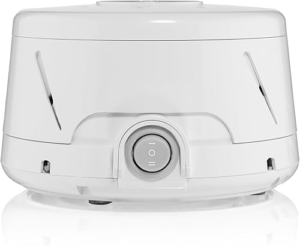
Sound matters too. If you’re upgrading your sleep environment, a white noise machine paired with blackout curtains addresses the two biggest environmental sleep disruptors at once.
What to Spend
Decent blackout curtains run $25 to $50 per panel. Below that price point you’re usually getting foam backed fabric that degrades fast. Above $50 per panel you’re mostly paying for aesthetics and brand name, not better light blocking.
right balance for most people is a $30 to $40 triple weave panel from a brand like NICETOWN, BGment, or Deconovo. Add a $15 wraparound rod and you’re looking at under $100 total for a fully blacked out window. That’s cheaper than most sleep gadgets and probably does more for your sleep than half of them.
If you’re automating your bedroom setup, a smart plug on a bedside lamp can complement blackout curtains by gradually dimming your room lighting before bed. Small changes that cost under $15 each add up fast.
Quick Checklist Before You Buy
Triple weave over foam backed if the budget allows. Measure your window then add 6 inches on each side and 4 to 6 inches above for rod placement. Get panels that are 1.5 to 2x the window width. Make sure they reach the floor. Grab a wraparound rod. And if you’re a light sleeper, pair them with a sleep mask for the last 5% of light that always finds a way in.
Thats really it. Blackout curtains aren’t complicated once you know what to look for. Most people just buy the wrong size or skip the wraparound rod and then blame the curtains.
You might also like:
Browse all Sleep Environment >