







What You Need to Know
Sleep is one of the most powerful tools your body has for recovery, memory consolidation, and overall health. Yet most people don’t fully understand what happens during sleep or how to improve it. This guide covers the science of sleep and actionable, evidence-based strategies to help you get deeper, more restorative rest every night.
Sleep isn’t a single uniform state, your brain cycles through distinct stages throughout the night, each serving a different purpose.
This is the transition between wakefulness and sleep, typically lasting just a few minutes. Your muscles relax, your heart rate slows, and your brain produces alpha and theta waves. It’s easy to wake someone from this stage, and they may not even realize they were asleep.
You spend about 50% of your total sleep time in Stage 2. Body temperature drops, heart rate continues to slow, and the brain produces sleep spindles, brief bursts of rapid neural activity that researchers believe play a role in memory consolidation and learning. This stage prepares your body for deep sleep.
This is the most physically restorative stage of sleep. Your body repairs tissues, builds bone and muscle, strengthens the immune system, and releases growth hormone. Deep sleep is hardest to wake from and is most abundant in the first half of the night. People who don’t get enough deep sleep often wake up feeling unrefreshed regardless of total sleep duration.
REM sleep is when most vivid dreaming occurs. Your brain becomes highly active, almost as active as when you’re awake, while your body enters temporary muscle paralysis (atonia) to prevent you from acting out dreams. REM sleep is critical for emotional processing, creativity, and memory consolidation. REM periods get longer as the night progresses, which is why cutting sleep short often means missing out on this important stage.
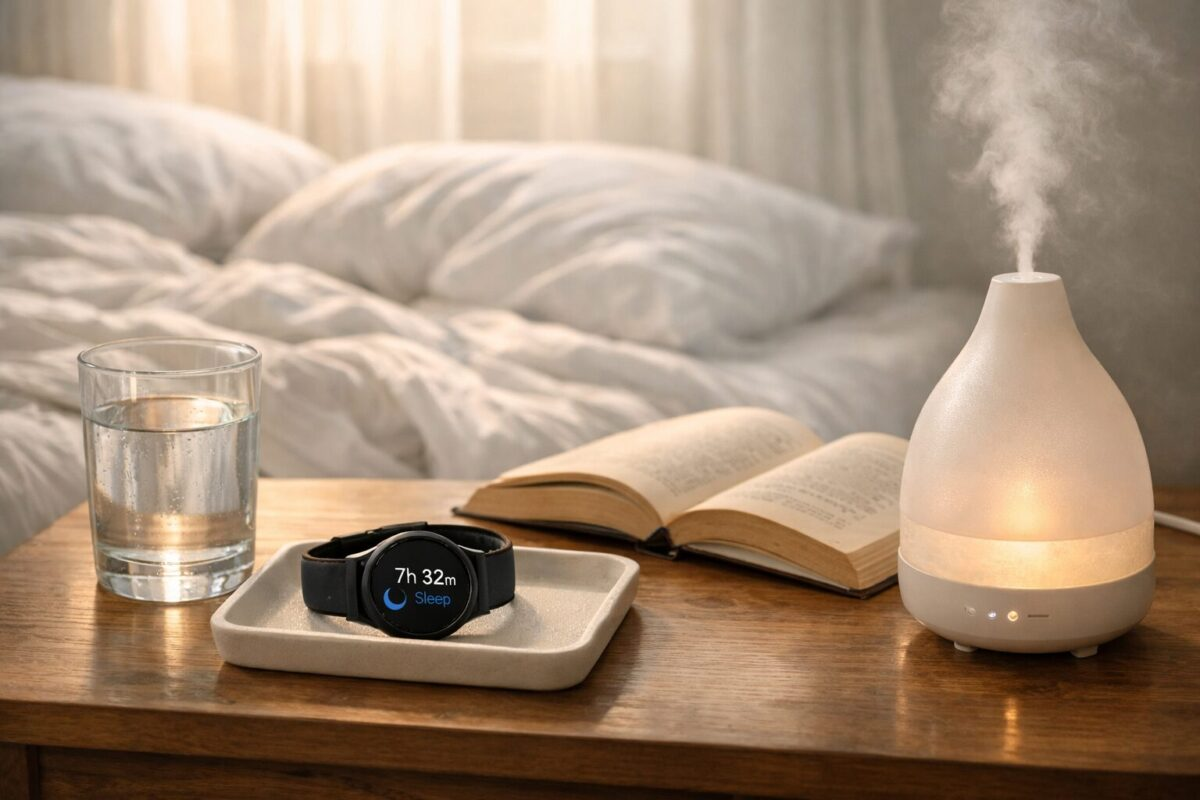 sleep tracker watch, glass of water, book, and diffuser with soft morning light” style=”width:100%;border-radius:12px;margin:1.5rem 0;” />
Final Verdict
If you consistently struggle to fall asleep, stay asleep, or wake up feeling unrefreshed despite following good sleep hygiene practices, it may be time to consult a sleep specialist. Conditions like sleep apnea, restless leg syndrome, and chronic insomnia are highly treatable but often go undiagnosed for years. A sleep study can identify underlying issues that no amount of mattress shopping or supplement-taking can fix.
You might also like:
- Why We Sleep by Matthew Walker, The Book That Will Change Your Bedtime
- Sports Research vs Nutricost L-Theanine: Budget Sleep Supplement Showdown
- Memory Foam vs Hybrid Mattress: Which Is Better for Your Sleep Style?
Browse all Sleep Science & Tips
Frequently Asked Questions
How much sleep do adults actually need?
Most adults need 7-9 hours nightly. Some people are “short sleepers” who function fine on 6 hours, while others need 10. Pay attention to how you feel on different amounts, that’s your baseline.
Is sleeping more on weekends helpful for sleep debt?
Partially. A little extra sleep on weekends can help, but it doesn’t fully “catch up” if you’re consistently short during the week. Your body prefers consistency. The best approach is sleeping 7-9 hours every night.
Can I “train” myself to need less sleep?
Not really. Sleep need is mostly genetic. You might feel okay on less sleep temporarily, but your body will eventually pay the price with worse health, mood, and cognition. Respect your natural sleep need.
What happens if you’re chronically sleep deprived?
Chronic sleep loss damages your immune system, increases inflammation, impairs memory and decision-making, and raises risk of heart disease and obesity. It’s not sustainable long-term, your body needs rest to repair itself.