



Buying your first sleep tracker is weirdly stressful. Theres a ring, a wrist band, a watch, a strap that goes around your chest, and now mattress sensors that don’t touch you at all. They all promise to fix your sleep. Most of them won’t, but some of them will at least show you why your sleep is the way it is. Here’s what actually matters when you’re picking one.
Start With the Form Factor
The single biggest decision is what you want strapped to you while you sleep. Three real categories:
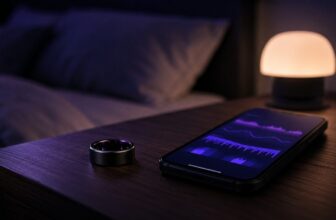
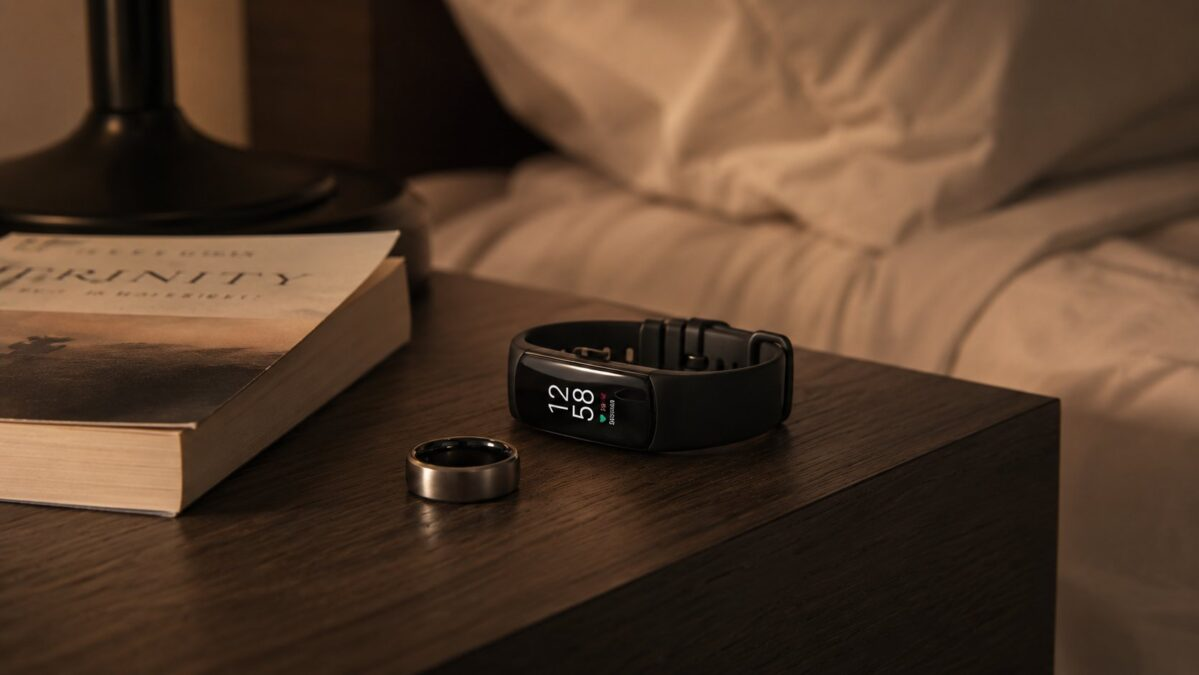
- Smart rings, like the Oura Ring or the various budget knockoffs. Comfortable, easy to forget about, but you have to keep it charged separately from everything else and the screen is on your phone
- Wrist trackers, like the Fitbit Charge or Inspire line. These double as fitness watches during the day, which is a real plus if you don’t want two devices
- Chest straps, mostly the WHOOP. Great data, but a strap on your chest 24/7 is not for everyone
If you don’t already wear a watch to bed, a ring is usually the easier first step. If you already wear a Fitbit or Apple Watch during the day, just keep it on at night and skip buying anything new for a couple of weeks. See if the data actually changes anything for you before you upgrade.
The Three Things Every Tracker Should Get Right
Sleep Stage Detection
Every tracker breaks your night into deep sleep, REM, and light sleep. The honest truth is none of them are as accurate as a sleep lab. They’re all using heart rate variability and movement to guess. The good ones get you within shouting distance of reality, the bad ones might as well be flipping a coin. Oura and WHOOP are the closest to lab-grade for what consumers can buy. Fitbit is solid. The cheap Amazon rings, less reliable.
Heart Rate Variability (HRV)
HRV is the metric that actually tells you whether your body is recovering. Low HRV most mornings means you’re stressed, sick, hungover, or training too hard. Watching this trend over weeks teaches you more about yourself than any sleep score can. If a tracker doesnt do HRV well, skip it. Oura and WHOOP both do this exceptionally. Most basic Fitbits do it but in a less granular way.
Battery Life
If you have to charge your tracker every night, you’re going to forget. Then you’re going to lose the data you actually wanted. The Oura Ring runs about 7 days. WHOOP claims 5 days. Apple Watch needs nightly charging, which is the main reason it’s a bad sleep tracker by default. Most rings beat most watches here.
Subscription, or No Subscription?
This is where it gets annoying. Some trackers lock the actually useful insights behind a monthly fee:
- Oura: $5.99 per month for the full insights (sleep score breakdown, readiness score, etc.)
- WHOOP: their entire model is subscription, you get the band free but pay roughly $239 per year
- Fitbit Premium: $9.99 per month, but the basic Fitbit data is free without it
- Apple Watch / Samsung: no subscription for sleep tracking
- Amazfit: no subscription, full data included
Do the math over 3 years before you buy. A “free” WHOOP costs $717 over 3 years of membership. The Oura Ring is roughly $300 upfront plus $215 in subscriptions. An Amazfit watch is $100 once and done. Big difference depending on what you actually use.
iPhone or Android?
Most modern trackers work with both. But the integrations are not equal:
- Apple Watch is iPhone-only and the only tracker that lives inside Apple Health by default
- Samsung Galaxy Watch is most powerful with a Samsung phone, the Galaxy AI sleep features wont fully work on iPhone
- Oura, WHOOP, Fitbit, Garmin, and Amazfit all work fine on both platforms
If you live in one ecosystem and you don’t want to fight your phone, just stay there.
Specific Use Cases
“I sleep hot”
A wrist tracker is going to feel awful with a chest strap or thick band on a hot night. Go with a ring or a slim wrist band. Oura is the most comfortable option here, the WHOOP chest strap is the worst.
“I want it for athletic recovery”
WHOOP is built for this. Their strain and recovery scores are the gold standard for serious athletes. Oura is also good. Most basic Fitbits are not designed for this.
“I just want to know if I’m sleeping enough”
Honestly? A basic Fitbit Inspire 3 or Charge 6 will tell you exactly that for $100 or less. You don’t need a $300 ring for “I slept 6 hours.”
“I want zero subscription, ever”
Look at Amazfit, Garmin, or Samsung. All three offer good sleep tracking with no monthly fees.
“I don’t want to wear anything to bed”
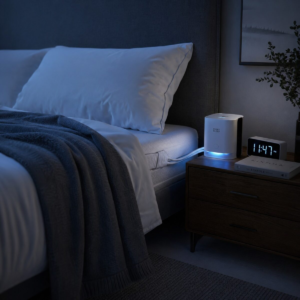
Look at under-mattress sensors like the Withings Sleep or Eight Sleep Pod. The data won’t be quite as accurate as a body-worn tracker, but you don’t have to remember anything.
The Apps Matter More Than You Think
Trackers all collect roughly the same data. What you do with that data depends entirely on the app. Oura’s app is the gold standard for being clear, motivating, and not overwhelming. WHOOP is dense, data-heavy, and feels like a coach. Fitbit’s app is fine but heavy on upsells for Premium. Apple’s Sleep app is bare bones unless you add a third-party app on top.
Try the apps in the app store before you buy the hardware. They’re all free to download and you can see what the interface actually looks like.
What About Accuracy Claims?
Every brand says theirs is the most accurate. Theyre all lying a little, because none of them have done a polysomnogram on you. The big consumer studies show Oura, WHOOP, and Fitbit cluster within a few percentage points of each other for sleep stage detection. The cheap stuff (no-name rings, sub-$50 watches) is meaningfully worse. Anything from a real brand is probably good enough for the trends.
The trends are what matters. Whether you got 7 hours and 14 minutes vs 7 hours and 22 minutes doesnt matter. Whether your average sleep over the last 30 days is going up or down, that matters.
Quick Buying Cheat Sheet
- Best overall ring: Oura Ring Gen 3 ($299 + $5.99/mo)
- Best ring without subscription: Amazfit Helio Ring ($299, no fees)
- Best for athletes: WHOOP 5.0 ($239/year all-in)
- Best budget wrist tracker: Fitbit Inspire 3 (under $100)
- Best mid-range wrist tracker: Fitbit Charge 6 ($150)
- Best if you already have an Apple Watch: just install AutoSleep, don’t buy more hardware
Bottom Line
Sleep trackers are most useful in the first 60 days, when you learn things about yourself you didn’t know. After that, they become background noise. Pick one that fits your lifestyle, doesnt require nightly charging, and has an app you actually like. The “best” tracker is the one you’ll actually wear every night for 6 months. A $100 Fitbit you wear nightly beats a $400 WHOOP that lives in a drawer.