


Circadian Sleep Checkups: The 2026 Trend Wearable Brands Are Pushing

Circadian Sleep Checkup Wearable Trend Explained
“Sleep checkup” is the phrase showing up in 2026 across sleep medicine conferences, wearable brand marketing, and the more thoughtful end of the wellness press. The idea: just like you get a dental checkup twice a year or a physical annually, your sleep should get periodically assessed with the same rigor.
The twist in 2026 is that the checkup doesnt have to happen at a sleep lab. Consumer wearables have gotten precise enough on certain metrics (sleep timing, body temperature rhythms, heart rate variability patterns) that a 30 to 90 day data pull from a ring or watch can show a circadian rhythm specialist most of what they need to know.
Heres what the concept actually means, where the science supports it, and which devices are starting to position around it.
What Is a Sleep Checkup, Really
The narrow medical definition is a structured assessment of sleep quantity, sleep quality, circadian timing, and sleep disorder risk. In a clinical setting it includes a sleep history interview, questionnaires (Epworth Sleepiness Scale, PSQI), and sometimes actigraphy or a home sleep apnea test.
The 2026 consumer version compresses that into something simpler:
- 30 to 90 days of wearable data showing sleep timing consistency, total sleep, sleep efficiency
- Body temperature rhythm trends (when does your temperature actually drop at night?)
- HRV patterns relative to sleep stages
- Resting heart rate over time
- Self reported symptoms (snoring, daytime sleepiness, restless legs, morning headaches)
This data is enough to flag the major issues: irregular schedule, possible delayed sleep phase syndrome, possible sleep apnea, possible insomnia patterns. Not enough to diagnose. Enough to know whether to go further.
The Science Behind Circadian Assessment
The circadian rhythm is the bodys roughly 24 hour internal clock that governs sleep timing, body temperature, hormone release, and dozens of other systems. When circadian rhythm gets disrupted (jet lag, shift work, inconsistent schedule, late night light exposure) the downstream effects are large: metabolic dysfunction, mood disorders, cognitive impairment, increased mortality risk.
The research literature has been clear for years that circadian disruption is a major modifiable health risk factor. The barrier to action has been measurement. Without continuous monitoring, you couldnt easily quantify someones circadian alignment.
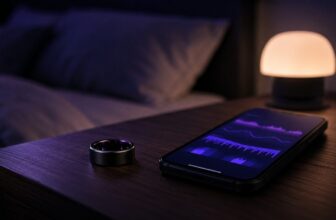
Wearables changed that. The Oura Ring measures body temperature 24/7 and produces a recognizable circadian curve. Whoop tracks HRV patterns aligned with sleep timing. Garmin watches monitor sleep timing consistency. The data is now there. The clinical interpretation is starting to catch up.
Which Wearables Are Positioning Around This
Oura. Most invested in the circadian framing. Their app added “Circadian Rhythm” insights in 2024 that map your body temperature curve, sleep timing variance, and chronotype estimation. Closest to a real consumer sleep checkup output.
Whoop. Less focused on circadian directly, more on training-recovery balance. The data could support a circadian read but the app doesnt frame it that way.
Garmin. Has the data. Doesnt present it as circadian assessment. The Body Battery feature is adjacent but more proximate to “current state” than “circadian alignment.”
Apple Watch. Sleep tracking improved a lot in watchOS 11. Apple Health Summary shows sleep timing trends. Still positioned more as general health than circadian focus.
New entrants. Two startups (RhythmWear and Cycadia) are launching in 2026 with circadian assessment as their primary value prop, not a feature on a fitness tracker. Both run on subscription models and partner with sleep specialists for telehealth follow ups.
The Pieces a Good Circadian Checkup Includes
A useful sleep checkup in 2026 should produce these outputs from your wearable data:
- Sleep midpoint variance. How much does your “middle of sleep” time shift from night to night? More than 30 minutes variance is associated with worse outcomes.
- Sleep timing alignment. Are you sleeping during your biological night? People with a strong morning chronotype trying to sleep from 1am to 9am are working against their circadian rhythm.
- Body temperature trough. When does your body temperature reach its lowest point overnight? If its 6am, your circadian phase is delayed. If its 2am, you might be advancing.
- Recovery patterns. Does HRV recover during sleep? If it stays low overnight, something is interfering (stress, alcohol, sleep apnea).
- Total sleep adequacy. Are you actually getting enough sleep for your age? Most adults need 7 to 9 hours. The average wearable user is getting 6 hours 45 minutes.
What to Do With the Results
A circadian sleep checkup gives you data. The action depends on what the data shows.
If sleep timing variance is high: Anchor your wake time. Same time every day including weekends. The single most powerful behavioral change.
If body temperature trough is late (after 5am): Get bright light in your eyes within 30 minutes of waking. Morning sunlight is best, 10,000 lux light box second best.
If HRV doesnt recover overnight: Investigate. Possible causes include alcohol within 3 hours of bed, anxiety, sleep apnea (loud snoring + gasping + daytime fatigue is the triad), or chronic stress.
If total sleep is consistently under 7 hours: Move bedtime earlier. The brain doesnt compensate for sleep loss long term.
If wearable flags red flags (very low oxygen saturation, very high overnight heart rate, irregular breathing): Go see a sleep specialist for a real test. Wearables are screeners, not diagnostic.
Is the “Circadian Sleep Checkup” Trend Real?
The science is real. The consumer framing is new. Whether it stays a trend or fades depends on whether wearable brands actually deliver useful, actionable assessments rather than another “score” to chase.
What would make it stick: pairing wearable data with affordable telehealth consultations with sleep specialists. Take your 60 days of Oura data, $99 for a 30 minute review with a board certified sleep physician, leave with three concrete recommendations.
That product doesnt fully exist yet but its close. Watch this space over the next 12 months.
The Honest Take
You dont need a “circadian sleep checkup” to know if your sleep is bad. If you wake up groggy, if you cant fall asleep, if you wake up multiple times a night, your sleep is bad. You already know.
What the checkup framing actually does is give you a structured way to figure out WHY. Which is genuinely useful. Most people who think they have insomnia actually have a circadian misalignment thats fixable with light timing and schedule consistency. They just dont know it.
A sleep checkup, done right, is a $0 to $300 intervention that can save people from $5,000 sleep clinic visits or, worse, years of sleep aids treating symptoms instead of causes. The trend is worth watching.