





Memory Foam vs Hybrid Mattress: Which Is Better for Your Sleep Style?

What You Need to Know
When shopping for a new mattress, two of the most popular options you’ll encounter are memory foam and hybrid mattresses. Both offer distinct advantages and drawbacks, and choosing between them largely depends on your personal sleep style, body type, and preferences. This guide will help you understand the key differences and determine which mattress type is right for you.
Memory foam is a viscoelastic material that was originally developed by NASA in the 1960s. It responds to body heat and weight, conforming closely to your body’s shape. This creates a customized sleeping surface that distributes your weight evenly across the mattress.
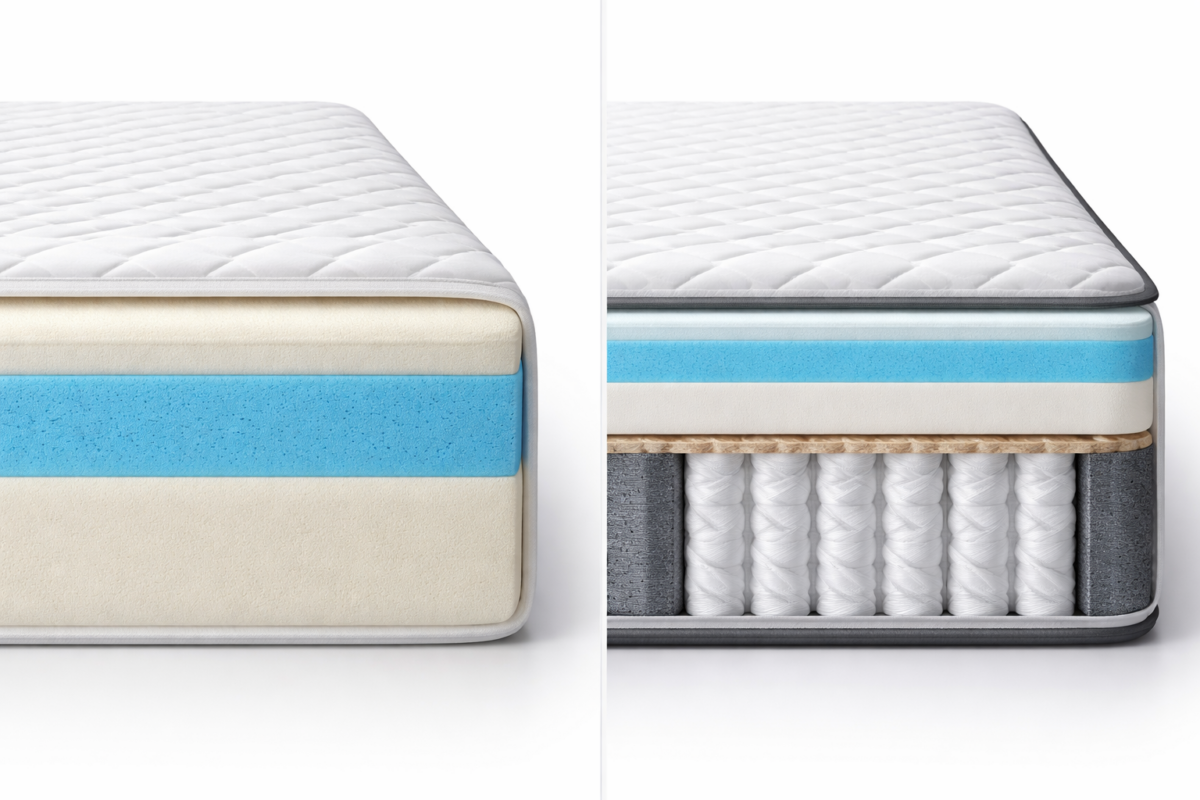
Memory foam mattresses are typically constructed with layers of foam of varying densities. The top layers are softer for comfort, while lower layers are denser for support. This construction makes memory foam mattresses excellent for:
A hybrid mattress combines two or more materials, typically memory foam or latex on top with a coil or spring support system beneath. This combination aims to provide the comfort benefits of foam with the responsiveness and cooling properties of traditional spring mattresses.
Hybrid mattresses typically feature:
Memory foam mattresses offer a slower response to movement and weight changes. They sink deeper into the mattress, which some people find comforting and others find too cradling. Hybrid mattresses respond more quickly due to their coil systems, providing a bouncier feel that many sleepers prefer. If you frequently change positions or find it difficult to move around on your mattress, a hybrid might be the better choice.
Final Verdict
Disclosure: Some links in this article are affiliate links. We may earn a commission at no extra cost to you.
You might also like:
- Amazon Basics Cooling Gel Mattress Topper Review: Budget Comfort for Hot Sleepers
- COONP Mattress Topper Review: Budget Pillowtop Comfort for Any Bed
- EGOHOME Cooling Gel Mattress Topper Review: Budget-Friendly Comfort Upgrade
Browse all Mattresses & Toppers