




How to Choose a Mattress Topper: 2026 Buyer’s Guide

Update, October 2026: Eight Sleep replaced the Pod 4 and Pod 5 with the Pod 6 in September 2026, so where this page mentions the Pod 4, the Pod 6 is the current model.
A good mattress topper can make a too-firm bed bearable or add years to a tired mattress. A bad one leaves you waking up hot, achy, or sliding off the edge of your bed. The difference is knowing what to look for. This guide covers the specs that matter and the three picks worth considering in 2026.
What Actually Matters
Thickness
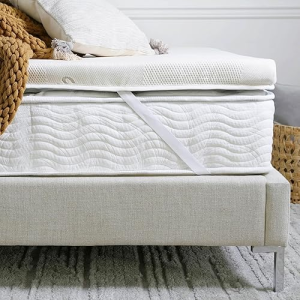
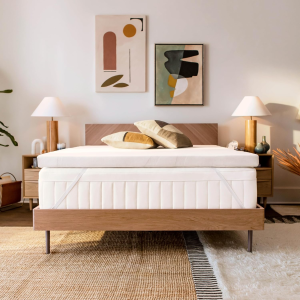
2 inches is the minimum to feel a difference. 3-4 inches is the sweet spot for actually changing how your bed feels. Over 4 inches and you run into problems with fitted sheets, plus you raise the bed so much that getting in feels weird. Skip the 1-inch pads, they do almost nothing.
Material
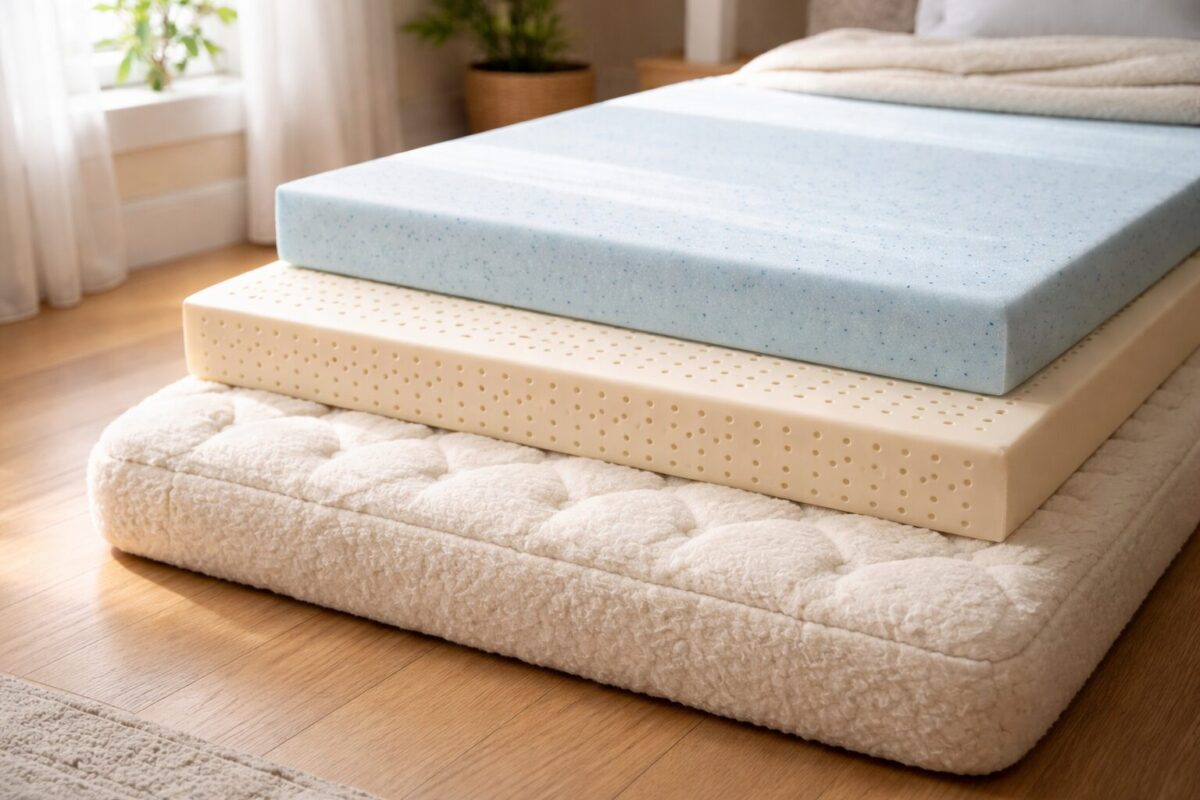
Memory foam contours and absorbs motion. Latex is cooler and more bouncy. Wool regulates temperature naturally but costs more. Down and featherbed are soft and traditional but dont add support. Match the material to your problem: too-firm bed wants memory foam, hot sleepers want latex or wool.
Density (for memory foam)
Look for 4+ lbs density. Under 3 lbs and the topper collapses in 18 months. Manufacturers sometimes hide this spec, which is a bad sign. Cheap foam is where most topper disappointment comes from.
Cooling features
Gel infusion helps a little for the first hour, then saturates. Open-cell foam breathes better than traditional closed cell. Copper and graphite infusions are mostly marketing. The best cooling is a latex topper or a wool one, not “cooling gel memory foam.”
Fit
Check if your fitted sheets still work. Deep pocket sheets usually go to 18 inches. If your mattress is already thick, a 4-inch topper might push you past that. Some toppers come with their own fitted covers, which helps.
Trial period and warranty
A good topper brand offers 100+ night trials. If they dont, theyre betting you wont like it enough to make it worth the hassle. 5 year minimum warranty for a quality piece.
Material Comparison at a Glance
Four main materials dominate the topper world, and each has specific strengths. Quick cheat sheet.
Memory foam. Best pressure relief, contours to your body. Sleeps hot unless open cell or cooling infused. Good for side sleepers and pressure point issues. Life span 3 to 5 years.
Latex. Cool, bouncy, durable. Doesnt sink like memory foam. Great for heavier sleepers and anyone who moves around a lot. Pricier up front but lasts 7 to 10 years. Best value long term.
Wool or cotton fiber. Most breathable. Softer feel than foam. Good for hot sleepers who dont need deep pressure relief. Compresses over time, shorter life (2 to 4 years).
Down or down alternative. Softest, most plush. Zero support. Good on top of an already supportive mattress, bad as a fix for a firm mattress. 2 to 3 year life.
Features That Actually Matter in a Mattress Topper
The listings for mattress toppers are a jumble of buzzwords. Here’s what moves the needle when you sleep on it versus whats filler.
Thickness of 2 to 4 inches. Under 2 and it barely changes how your mattress feels. Over 4 and you run into fitted sheet issues and the topper moves around. 3 inches is the sweet spot for most people.
Density of the foam (if foam). Density tells you durability. Look for 4 lb per cubic foot or higher for memory foam. Lower density foams lose their feel in 12 months.
Natural vs synthetic latex. Natural latex lasts way longer and sleeps cooler. Synthetic latex is cheaper but degrades faster. Blended is a middle ground.
Secured placement. Either elastic straps, a fitted style, or non slip backing. Toppers that just sit loose on the mattress migrate every night and frustrate you fast.
Real heat management. “Cooling” alone is meaningless. Look for perforations, open cell foam, or latex for actual airflow. Gel infused alone doesnt cut it.
Our Picks by Use Case
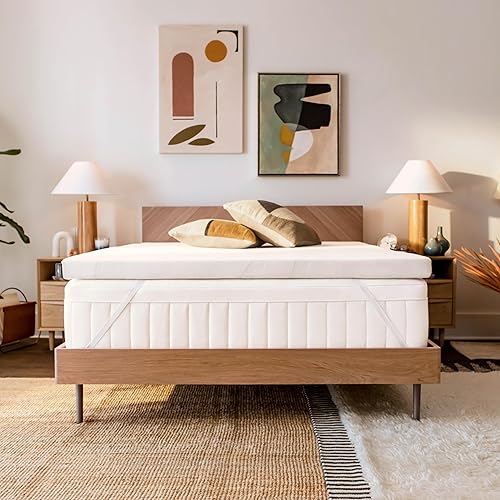
Best Overall: Tempur-Pedic TEMPUR-Topper Supreme
Premium memory foam that holds up for a decade
Tempur foam is what made memory foam mainstream and its still the gold standard. 5.3 lb density means it wont flatten out in 2 years like budget foam. 3 inch profile transforms a firm bed. Yes its pricey but the math works out, this replaces a new mattress for a fraction of the cost.
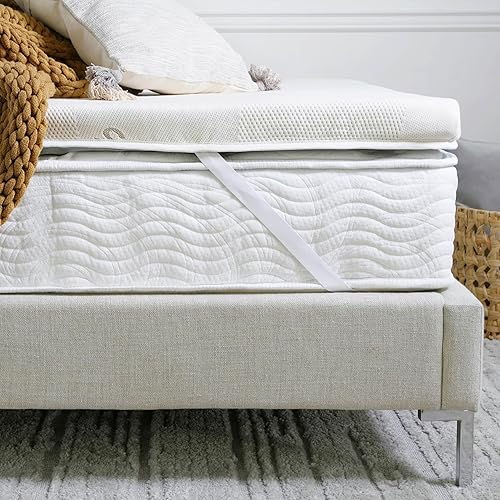
Best for Hot Sleepers: Saatva Graphite Topper
Natural latex that sleeps cool
Natural latex is the coolest sleeping material in the category. Saatva’s Talalay version has tiny air channels throughout which genuinely helps air move. Thinner profile at 1.5 inches but still adds real cushion. If you run hot or live somewhere without AC, latex beats memory foam every time. Vegan option available.
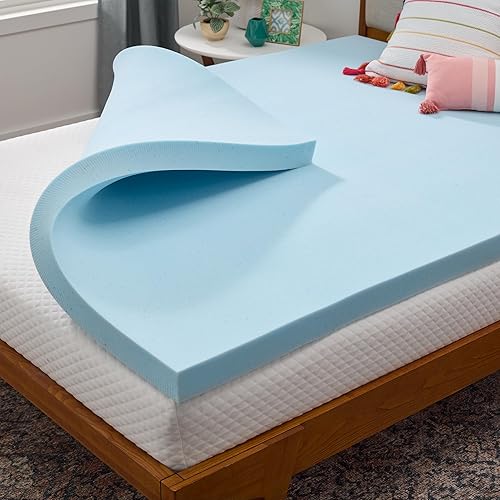
Best Budget: Linenspa 3-inch Gel Memory Foam
The value pick, honestly surprising
Under $100 for a queen and actually not bad. Density is around 3.5 lb which isnt elite but isnt trash. Expect it to last 3-5 years before flattening. If youre in a rental or on a short budget, this is a reasonable bridge. Wont match the Tempur-Pedic but it delivers 70% of the benefit for 20% of the price.
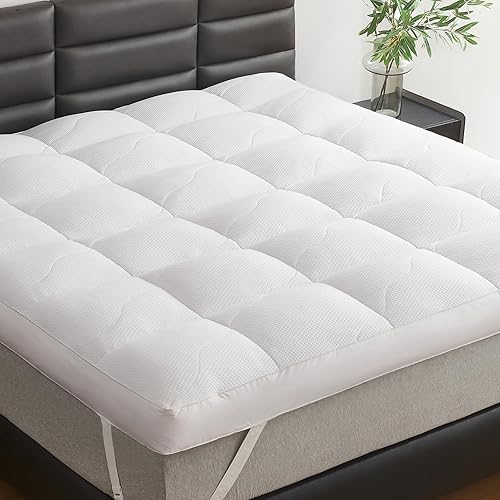
Best for Plushness: Goose Feather Mattress Topper
Sleeping in a cloud, literally
Different purpose from foam or latex. This is pure softness, no support improvement. If your bed is already supportive but too firm, a featherbed on top adds the cloud feeling. Wont help a sagging mattress. Needs fluffing every few days to redistribute down. Not for heavy sleepers or anyone with back pain.
Common Mistakes
Buying a topper to fix a sagging mattress. A topper on a broken mattress doesnt fix the sag, it just adds a layer on top of the problem. If your mattress has a visible dip, get a new mattress.
Falling for “cooling” claims on memory foam. All memory foam sleeps warm. Gel helps for an hour. If cooling matters, buy latex or wool.
Skimping on thickness. 1-inch toppers feel like paper. 2 inches is the floor. 3-4 inches is where real change happens.
Ignoring density specs. A 4-inch topper at 2 lb density is worse than a 3-inch topper at 5 lb density. Density matters more than thickness.
Red Flags That Mean Skip the Topper
Amazon is full of mattress toppers that look okay in photos and feel like a pool floaty in person. These tells save you from buying trash.
First, price way below the category. A 3 inch memory foam queen topper under $60 is either very low density foam or thinner than advertised. Trust the pricing, $100 to $200 is the real range for quality.
Second, no density specs listed. Brands hide density when its bad. If the listing doesnt say 3 lb, 4 lb, 5 lb per cubic foot, assume its 2.5 lb. Crap density.
Third, “medical grade” or “orthopedic” marketing without evidence. Those terms are unregulated. Real medical grade would list the certification.
Fourth, strong chemical smell that doesnt fade in 3 days. Memory foam off gasses a little for 24 to 72 hours, thats normal. Anything longer or stronger is cheap foam using more aggressive solvents.
Fifth, under 1 year warranty. Real toppers last 5 to 10 years. Brands that only warrant 12 months know their product wont last.
Frequently Asked Questions
Will a topper fix a too-firm mattress?
How long should a topper last?
Do I need a special cover for the topper?
Can a topper fix a really old mattress?
How often should I replace a mattress topper?
Do I need a specific sheet size for a topper?
Is memory foam bad for back pain?
Can a topper make a firm mattress softer?
As an Amazon Associate we earn from qualifying purchases. Prices accurate at time of writing.