


Sleepmaxxing in 2026: When Sleep Tracking Becomes Anxiety

The Sleepmaxxing Tracker Anxiety Loop No One Wants to Talk About
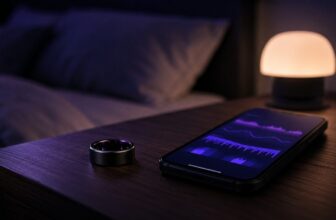
Sleep has officially become the most measured behavior in modern wellness. People who have never tracked anything in their lives are checking their Oura readiness score before their feet hit the floor. They know their deep sleep minutes, their HRV trend, their sleep efficiency percentage. The data is endless.
For most people this is mostly fine. For a growing number, it has flipped into something doctors are quietly calling orthosomnia – anxiety about sleep that itself disrupts sleep. The very tool that was supposed to help is making things worse. And nobody in the wellness influencer ecosystem is paid to point this out, so the conversation isnt happening in the places where it would actually help.
What Sleepmaxxing Actually Means in 2026
The original idea was reasonable. Improve sleep quality by stacking the things that work: consistent schedule, cool dark room, no screens late, magnesium, blackout curtains, white noise, mouth tape, the whole list. Sensible.
Sleepmaxxing as a 2026 wellness trend has become something else. It is now the pursuit of a perfect sleep score, measured nightly, with experimentation on dozens of variables and disappointment when the numbers dont improve. The pursuit has eclipsed the actual goal of feeling rested.
Signs you have crossed from “good sleep hygiene” into sleepmaxxing territory:
- Checking your sleep score before you check how you actually feel
- Adjusting your day based on the score rather than your body
- Feeling anxious if you forgot to wear the tracker
- Buying new sleep supplements or devices every two weeks
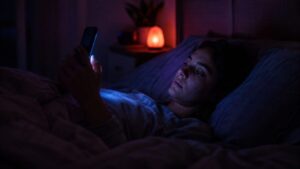
- Lying in bed worrying about whether tonight will be a good score
- Feeling worse on a “good number” night that subjectively felt restless
The Orthosomnia Problem
Doctors started using the word orthosomnia around 2017. It comes from “ortho” (correct) and “somnia” (sleep) – the obsessive pursuit of perfect sleep. Clinical sleep specialists report seeing more and more patients whose insomnia started after they bought a sleep tracker.
The mechanism is straightforward. Sleep tracker says “you only got 5 hours of deep sleep.” You feel anxious. The anxiety makes the next night worse. The next nights bad data makes you more anxious. The loop spins.
The cruel part is that consumer sleep tracker accuracy for sleep stage detection is roughly 65 to 85 percent compared to polysomnography. So some of the “bad nights” you panic about are actually fine nights the wearable misread.
What Sleep Trackers Actually Get Right
Before throwing them out entirely, lets be fair. Sleep trackers are accurate on:
- Total sleep time (within 10 to 20 minutes)
- Sleep schedule consistency (very good)
- Heart rate during sleep
- Heart rate variability trends over weeks
- Resting heart rate trends
- Body temperature trends (especially Oura)
These are useful data points. They show real patterns over time. A consistent decline in HRV over two weeks is a real signal. One night of “bad sleep score” is mostly noise.
What They Get Wrong (or Just Cant Measure Reliably)
- Sleep stages (REM, deep, light) – accuracy is around 75 percent on a good night
- “Sleep quality” composite scores – mostly arbitrary algorithm decisions
- Sleep efficiency on nights with kids, pets, partners in bed
- How rested you actually feel (which is what you should care about)
The composite “score” your watch shows you is not measuring how well you slept. Its measuring data points the algorithm thinks correlate with how well you slept. They often do. Sometimes they dont.
How to Use a Sleep Tracker Without Letting It Use You
The healthy way to use a tracker for sleep in 2026 looks like this:
- Check it on a weekly basis, not daily. Daily data is noise. Weekly trends are signal.
- Trust your body first. If you woke up feeling good and the score is 65, ignore the score. If you feel awful and the score is 90, the score is wrong.
- Use trends, not single nights. A 7 day moving average tells you more than any single morning.
- Track behavior changes, not optimization. Use the tracker to see if quitting alcohol improved your HRV over 30 days. Dont use it to chase a perfect deep sleep number every night.
- Take breaks. One week a month with no tracker is healthy. The wellness industry will not tell you this.
If You Recognize Yourself in This
You are not weird and you are not failing at wellness. Sleep anxiety driven by tracker data is a real phenomenon affecting a lot of high-functioning, health-conscious people who took good advice too far.
The fix is usually:
- Stop checking the score every morning. Move the watch to your dresser for a week.
- Re-anchor to subjective feel. “How rested am I right now?” matters more than any number.
- If anxiety persists more than 4 weeks, see a sleep specialist or therapist who handles insomnia (CBT-I is the gold standard treatment and works better than sleep aids for most cases).
- Replace the tracker checking habit with a one minute journaling habit. “How do I feel?” answered honestly tells you more than any algorithm.
Should You Get Rid of the Tracker?
Not necessarily. Trackers are useful tools used moderately. The problem isnt the tool. The problem is the relationship.
If you can wear an Oura ring and check the data twice a week without it changing your mood, keep wearing it. If checking the data is the first and most emotional thing you do in the morning, the tracker is owning you. Put it in a drawer for two weeks and see if sleep gets better. For a lot of orthosomnia cases, it does.
The Bigger Wellness Trap
Sleepmaxxing sits in a wider pattern. Every wellness behavior optimized to its extreme can flip from helpful to harmful. Clean eating becomes orthorexia. Exercise becomes overtraining. Meditation becomes a performance metric. Sleep tracking becomes orthosomnia.
The fix is the same in every case: optimization is a tool, not the goal. The goal is to feel good and live a good life. If the optimization is making the actual experience worse, the optimization has failed at its job. Drop it or change how you use it.
Sleep is one of the most natural things humans do. We did it for 200,000 years before we measured it. The data is useful. The data is not the point.