




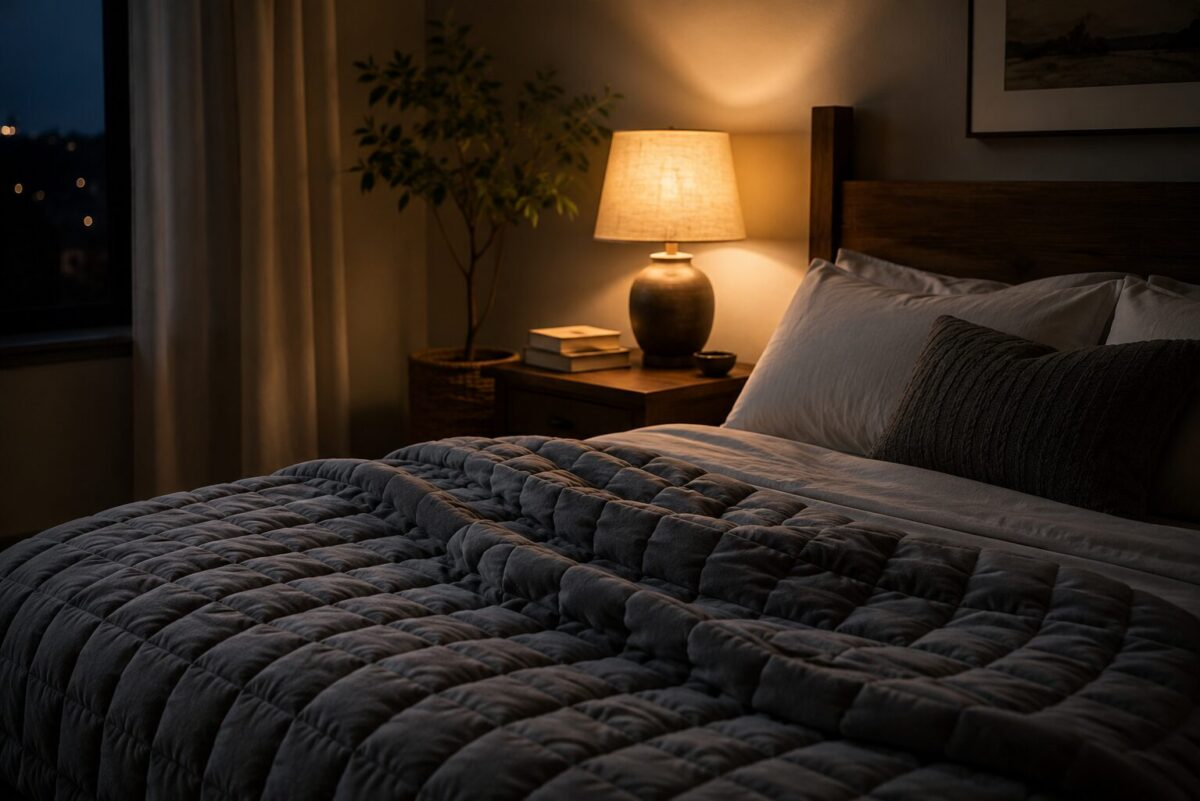
A weighted blanket is one of the few sleep buys where the wrong pick is basically useless. Too light and you dont feel a thing. Too heavy and you kick it off at 2am. So figuring out how to choose a weighted blanket comes down to a couple of numbers and one or two personal quirks, not whatever the box is selling.
Here’s what actually matters, roughly in the order it matters.
How to choose a weighted blanket: the short version
If you only remember four things: get one around 10% of your body weight, match the fabric to how hot you sleep, look for glass beads, and size it to your body instead of your mattress. That’s most of the decision right there. The rest is detail.
Start with the weight
The number people throw around is roughly 10% of your body weight. For a 150 pound adult that’s about a 15 pound blanket. For a 200 pound adult it’s closer to 20. Treat it as a starting point, not a rule. If you run anxious and want that pinned-down feeling, sizing up a pound or two usually feels better. If you’re a restless sleeper who flips a lot, go the other way so you can actually move under it.
Kids are a different story. If you’re shopping for a young child, talk to their pediatrician before anything else, because a weight that’s fine for an adult can be a real risk for a small body. There’s solid research behind the calming effect, deep pressure stimulation is the term, and we got into what holds up and what doesn’t in our piece on whether weighted blankets actually help you sleep.
Think about how hot you sleep
This is where most people get burned, and I mean that literally. A lot of weighted blankets are thick, quilted, and they trap heat like a sleeping bag in July. If you already sleep warm, look for a cooling knit or a blanket with a breathable cotton cover, and skip the plush minky ones no matter how soft they look in the listing photos.
Chunky knit weighted blankets are the exception worth flagging. No inner beads, just heavy yarn, so air actually moves through them and they run cooler. They cost more and they’re the ones you see draped over couches all over Instagram, but for hot sleepers that airflow is worth paying for.
Glass beads, not plastic
Inside most weighted blankets are tiny beads doing the weighing. Go with glass. Micro glass beads are smaller and denser, so the blanket stays thinner, the weight spreads more evenly, and they stay quiet when you shift around. Plastic poly pellets are cheaper but bulkier, and they can get a bit crunchy sounding over time. The small step up to glass is one of the easier calls here.
Size it to your body, not your mattress
Here’s the counterintuitive one. A weighted blanket should match you, not the bed. Buy a king size blanket for a king bed and the weight drapes over the sides and slowly slides off you during the night, which kills the whole point. Get one roughly the size of your body so the weight stays put on top of you. Sharing a bed and both want one? Two singles beat one giant shared blanket every time, especially since the two of you probably dont weigh the same.
Who should skip one
Weighted blankets arent for everyone. If you deal with sleep apnea, claustrophobia, certain circulation problems, or any trouble moving the blanket off yourself, they can do more harm than good. Same goes for toddlers and anyone who cant remove it on their own. When you’re not sure, a quick word with your doctor beats guessing.
Once your weight and material are sorted, the shopping part gets easy. We compared a handful and rounded up the ones worth the money in best weighted blankets for adults, and if you’re torn between a budget pick and a premium one, our YnM vs Bearaby comparison lays out what the extra cash actually buys you.