



An air purifier earns its spot in a bedroom for one reason: you breathe roughly 3,000 gallons of air a night, and if that air is full of dust, pollen, or pet dander, your nose knows it by 3am. Congestion is one of the sneakier causes of restless sleep. We covered the products side of this in our sleep picks for allergy sufferers, but picking the purifier itself trips people up, so this guide covers the specs that matter and the ones that dont.
Quick note before we start. If your problem is dry air rather than dirty air, a purifier wont fix it. We broke down which machine handles which job in humidifier vs air purifier for sleep.
Start with CADR, not marketing claims
CADR stands for Clean Air Delivery Rate. Its the one number on the box that comes from an independent test standard, and it tells you how much filtered air the unit actually pushes out, measured in cubic feet per minute. Higher is better for bigger rooms.
The lazy math that works: take your bedroom’s square footage and multiply by two thirds. A 12 x 12 bedroom is 144 square feet, so you want a smoke CADR of at least 95 or so. Most 10 x 10 to 14 x 14 bedrooms are well served by anything with a CADR between 100 and 150. Buying way over that isnt wasted money exactly, since a bigger unit can run slower and quieter for the same clean air. Thats actually the pro move for bedrooms.
Ignore “covers 1,000 sq ft” claims on the listing. Those figures usually assume one air change per hour, which is close to useless for allergies. For a bedroom you want the air turned over 4 to 5 times an hour.
Noise is the spec nobody checks and everybody regrets
A purifier that helps you sleep has to be quiet enough to sleep next to. Look for the decibel rating at the LOWEST fan speed, not the highest. Under 25 dB on low is genuinely quiet. 30 dB is a soft whisper and still fine for most people. Anything above 40 dB on the setting you plan to run all night will register as noise, not hum.
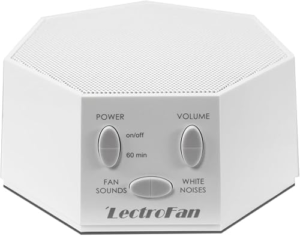
Some sleepers flip this and treat the fan as a feature. Steady broadband hum masks hallway noise and traffic the same way a white noise machine does, just less tunable. If you already know you sleep better with sound, a purifier with a strong but smooth mid speed can pull double duty.
Two smaller noise details worth checking in reviews: whether the unit beeps when you change settings, and whether the display lights turn all the way off. A bright blue air quality LED in a dark bedroom is exactly the kind of thing we told people to hunt down in our blackout curtains guide. No point blacking out the window and then installing a glowing ring two feet from your head.
Filters: where the real cost hides
The sticker price is maybe half of what you’ll spend. Replacement filters run anywhere from $20 to $80 a year depending on the model, and manufacturers make more on filters than on units. Before you buy anything, search the replacement filter price and do the math on two years of ownership. A $90 purifier with $50 filters costs more over time than a $150 purifier with $25 filters.
On filter type, the phrase to look for is True HEPA, sometimes written H13. The phrase to avoid is “HEPA-type” or “HEPA-like”, which is marketing for a filter that didnt pass the standard. If smells matter to you, pet odor or a partner’s late night cooking, get a model with a real activated carbon layer, not a thin black mesh. You can tell by weight, a real carbon filter has some heft to it.
Washable pre filters are a quiet money saver. They catch hair and big dust so the expensive HEPA layer lasts longer, and rinsing one takes two minutes.
Features worth paying for, and two to skip
Sleep mode is the big one. It drops the fan to its quietest speed and kills the display in one press. An auto mode tied to an air quality sensor is worth having too, the unit ramps up while you’re at work and settles down by bedtime. Timers are standard now. App control is fine but honestly most people set a schedule once and never open the app again.
Skip anything advertising an ionizer or UV light as a main feature. Ionizers can produce trace ozone, which is a lung irritant, the exact opposite of the job you hired the thing for. The EPA has been pretty clear on this. A plain fan plus HEPA filter does the work without the side effects. If a unit has an ionizer button, thats fine, just leave it off.
Placement, the free upgrade
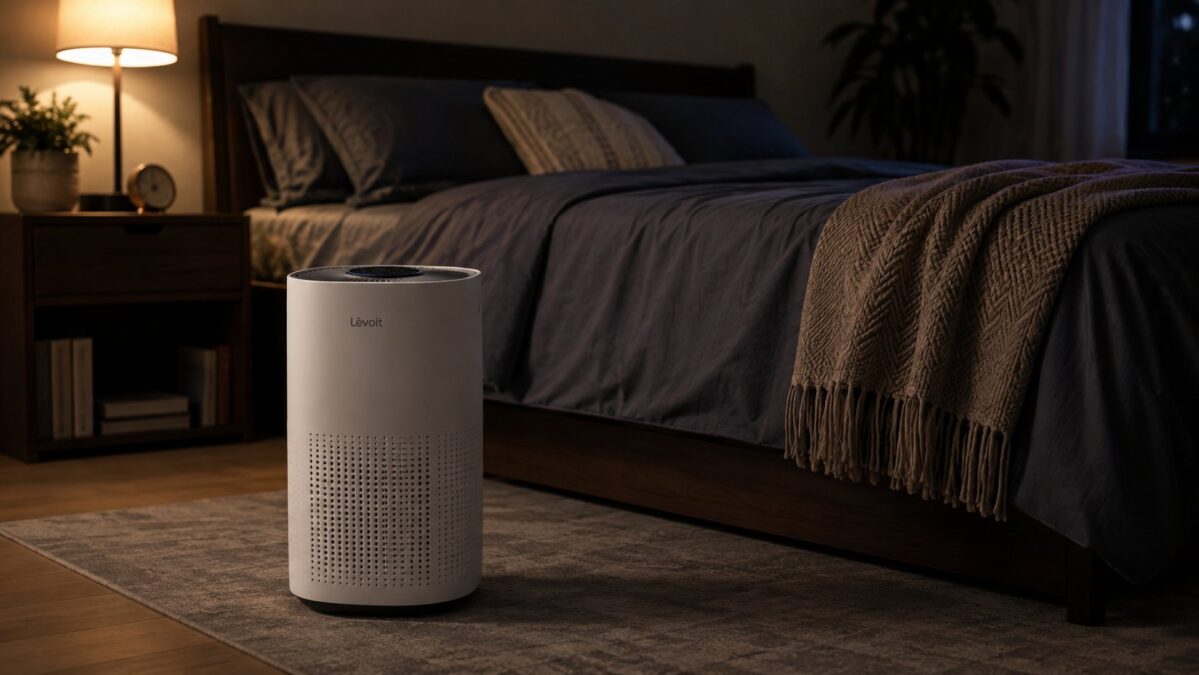
Dont shove it in a corner behind the nightstand. A purifier needs a foot or so of clearance to pull air in and push it out. Near the foot of the bed works well in most rooms. Keep it off the floor if you have thick carpet, and away from curtains that can get sucked against the intake. Run it on high for an hour before bed with the door shut, then drop to sleep mode when you turn in. You get clean air at bedtime without listening to the machine work for it.