





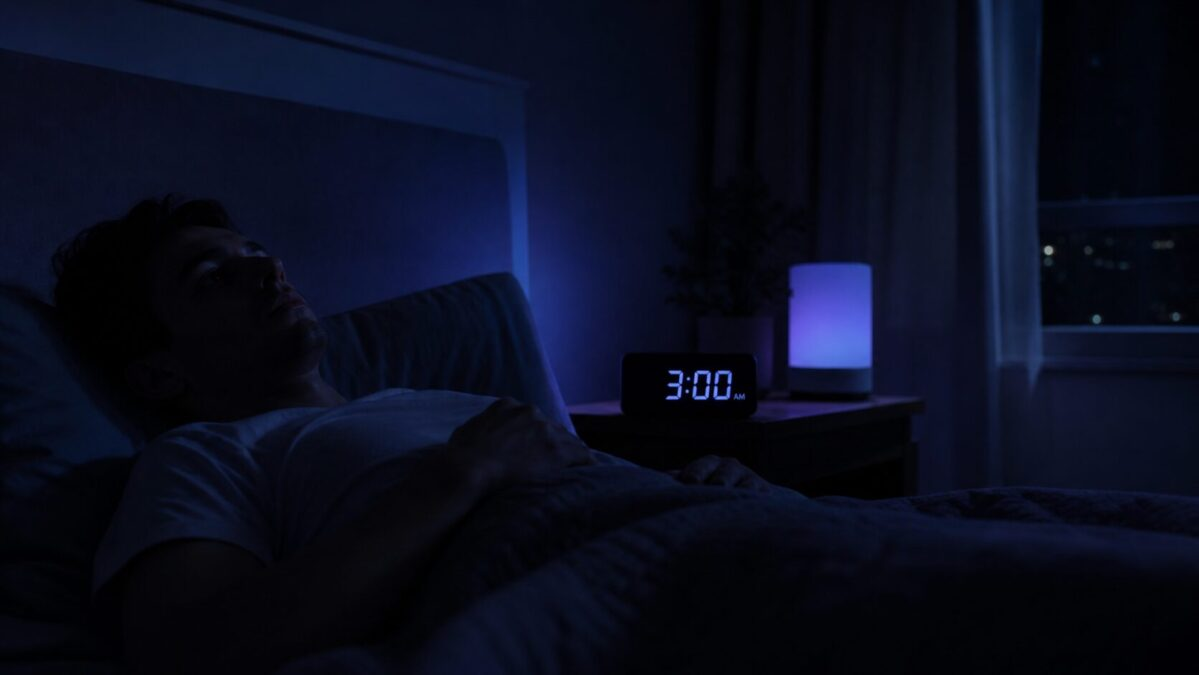
You went to bed at 11. Slept fine. Then your eyes pop open at 3:14 AM and stay open. This happens to a huge percentage of adults, often regularly. Here’s what’s actually going on physiologically and what to do about it.
Why 3 AM specifically?
Sleep cycles run roughly 90 minutes long. If you fell asleep around 11, the 3 AM wake lines up with the boundary between cycles 4 and 5, when sleep is naturally lighter. Most people have brief micro-wakes at these boundaries every night, the difference is whether you stay awake or roll over and slide back into sleep.
The most common culprits
1. Cortisol rhythm
Cortisol naturally starts climbing around 3 AM in preparation for waking. Normally this happens in the background. If you’re under chronic stress, cortisol spikes harder and earlier, and it’s enough to fully wake you. This is the most common cause.
2. Blood sugar dip
If you ate a carb-heavy late dinner, blood sugar can drop low around the 3-4 AM mark. The body fires adrenaline to compensate, and adrenaline wakes you up. Reasonable evening eating helps.
3. Alcohol metabolism
Alcohol’s sedative effect wears off about 4 hours after your last drink. If you had wine at 10 PM, the rebound wake hits around 3 AM. This is the classic “I fell asleep fine but can’t get back” pattern.
4. Bladder
The boring answer that’s often the right one. Drinking too much fluid in the 3 hours before bed wakes you for a bathroom trip, and once awake, your brain often won’t go back. Worth ruling out before chasing fancier theories.
5. Bedroom temperature
Body temperature naturally bottoms out around 3-4 AM. If your room is too warm (over 68°F for most people), your body wakes itself trying to thermoregulate.
6. Sleep apnea
Untreated sleep apnea causes micro-wakes throughout the night, and one of them tends to “stick” around 3 AM. If you wake up gasping or with a dry mouth often, get tested.
- Don’t check your phone. The light isn’t the worst part, the cognitive engagement is. Once you’re alert enough to read, you’re done sleeping.
- Don’t watch the clock. Knowing it’s 3:47 AM and you “still have 3 hours” creates anxiety. Cover the clock or roll over.
- If 20+ minutes pass, get out of bed. Sit somewhere dim, read something boring (a printed book, not a screen), return when you actually feel sleepy. Lying awake for hours teaches your brain that bed is a place for not sleeping.
- Box breathing. 4 seconds in, hold 4, out 4, hold 4. Repeat for 5 minutes. Activates parasympathetic recovery.
What to do during the day
- Cap evening alcohol. The “two drink rule” exists for a reason.
- Aim for last meal 3 hours before bed.
- Cool the bedroom to 65-68°F.
- Build a wind-down routine. Doesn’t have to be elaborate, just signals to your nervous system that the day is done.
- Sleep at the same time on weekends. Inconsistent schedules amplify the 3 AM wake pattern.
When to talk to a doctor
If you’re waking at 3 AM more than 3 nights per week, can’t get back to sleep, and it’s affecting daytime function, that’s chronic insomnia and worth getting evaluated. CBT-I (cognitive behavioral therapy for insomnia) has a 70 to 80 percent success rate and is available online now.
You might also like:
- The Science of Sleep Cycles
- 9 Sleep Myths the Science Disagrees With
- Top 10 Sleep Aids That Actually Work
Browse all Sleep Science & Tips >
Disclosure: Some links in this article are affiliate links. We may earn a commission at no extra cost to you.