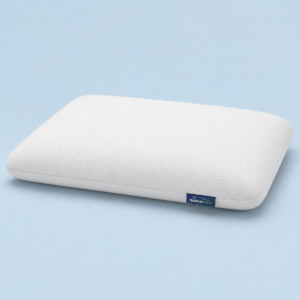








Side sleepers have a tougher pillow problem than back or stomach sleepers. The gap between your shoulder and your neck is bigger, and getting it right matters for both comfort and morning shoulder pain. Here’s how to actually pick the right pillow if you sleep on your side, in 2026.
Step 1: Measure your shoulder gap
Lie on your side without a pillow. Have someone (or your phone) measure the distance from the top of your shoulder to where your ear naturally rests. That’s the loft your pillow needs to fill.
For most adults, the right pillow loft is 4 to 6 inches when compressed. Most pillows on shelves are 3 to 4 inches, which is why side sleepers often end up with neck pain.
Step 2: Pick the right fill
Memory foam (solid block)
Cradles well, holds shape. Sleeps hot. Best for stationary side sleepers who don’t move much. Avoid if you sleep hot.
Shredded memory foam (or shredded latex)
The best balance for most side sleepers. Adjustable loft (you can add or remove fill), more breathable than a solid block. The Coop Original is the standard recommendation here.
Latex (solid Talalay or Dunlop)
Bouncy and supportive. Stays cool. Lasts 5+ years before any sag. The premium pick. Memory foam vs latex breakdown here.
Down/feather
Soft and customizable, but doesn’t hold loft. Side sleepers usually need to fluff it constantly. Skip unless you specifically want a soft, cloudy feel.
Polyfill
Cheap, mass-market. Compresses fast and goes flat in 6 months. Fine for guest beds, not for daily use.
Step 3: Test the alignment
Lie on your side with your pillow. Have someone look at you from the foot of the bed. Your spine, neck, and head should form a straight line. If your head is tilted up or down, the pillow loft is wrong.
Common signs you have the wrong pillow:
- Wake with shoulder pain (pillow too thin, shoulder takes the load)
- Wake with neck stiffness (pillow too thick or too thin)
- Wake on your stomach (your body chose to flatten the pillow itself, signal that it’s too high)
- Constantly fluff or fold the pillow during the night
Step 4: Check the cooling story
If you sleep hot:
- Avoid solid memory foam without gel infusion
- Look for shredded fills, latex, or buckwheat
- Pillows with phase-change material covers actually do help slightly
Step 5: Consider a body pillow
Side sleepers often benefit from hugging a small body pillow between the knees. Aligns the hips, reduces lower-back pressure. The Pharmedoc U-shape and Snuggle-Pedic body pillows are reader favorites.
Top picks by category
- Best overall: Coop Original Pillow ($75) – shredded memory foam, adjustable loft, washable.
- Best premium: Saatva Latex Pillow ($165) – latex with cotton cover, sleeps cool.
- Best budget: Beckham Hotel Collection ($35 for 2) – polyfill, decent for the price.
- Best for hot sleepers: Brooklinen Down Pillow with cooling cover ($85).
- Best for neck pain: Tempur-Pedic Neck Pillow ($89) – solid memory foam contour shape.
The biggest mistake side sleepers make
Buying the same pillow as their partner. If your partner sleeps on their back, their needs are very different from yours. A back-sleeper pillow used as a side-sleeper pillow is the #1 cause of “this pillow gives me neck pain”. Different sleeping positions need different pillows.
You might also like:
Browse all Pillows & Bedding >
Disclosure: Some links in this article are affiliate links. We may earn a commission at no extra cost to you.
Bigger upgrade? Pair the right pillow with the right topper, see our best toppers for side sleepers under $100.
Our side sleeper favorite: Coop Original Pillow
Adjustable fill, so you can add or remove foam until the loft matches your shoulder width. Its the pillow we point side sleepers to first, full thoughts in our Coop Original review. Prefer something with a removable inner layer instead of loose fill? The Casper Adjustable takes that route.