

Blue light has become the villain of modern sleep, blamed for everything from insomnia to bad skin, and an entire industry of amber glasses and screen filters has grown around the panic. The actual research is messier and honestly more useful. Some of the story holds up, some of it collapsed the moment someone ran a decent trial, and knowing which is which will save you money.
The part that holds up
Light at night suppresses melatonin, the hormone that tells your body bedtime has arrived. That part is settled science. The eye has special receptors that feed your internal clock, and theyre most sensitive to short wavelengths, the blue-ish end of the spectrum around 480 nanometers. Bright light in the evening delays your clock, and delayed clocks make for later, worse sleep. None of this is controversial.
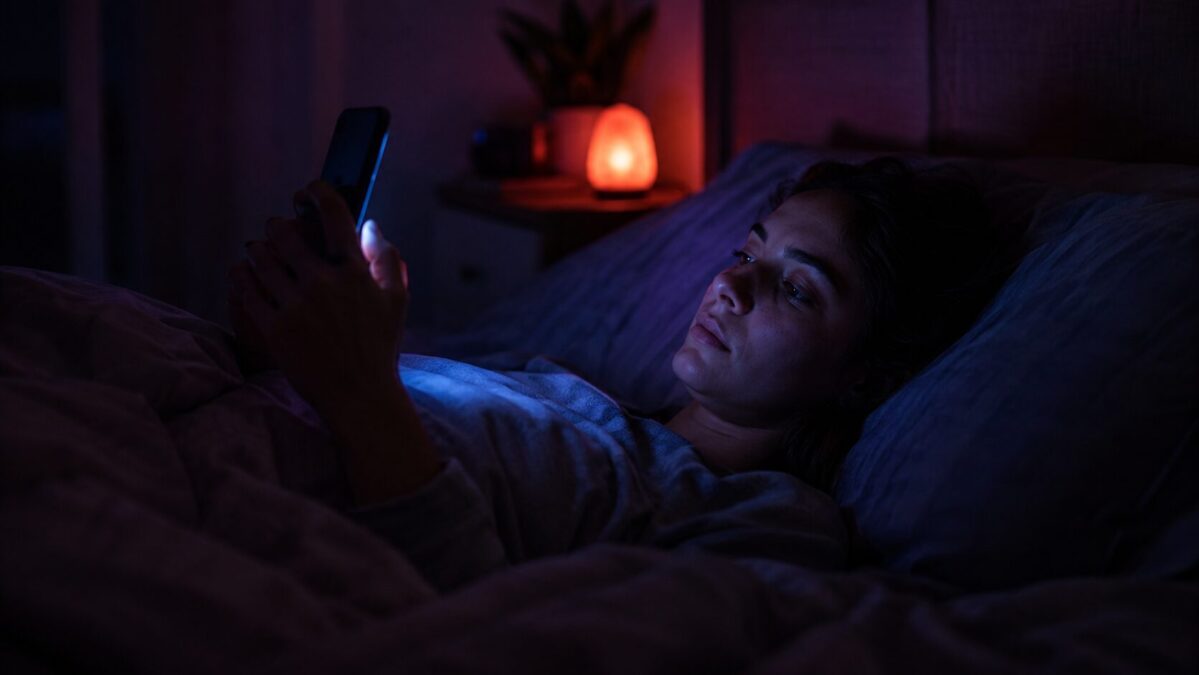
Here is the piece the glasses ads leave out: intensity and duration matter as much as color. A bright overhead room light pumps out far more sleep-disrupting light than a phone at low brightness held at arms length. People fixate on the phone and forget theyre sitting under a ceiling full of daylight-white LEDs until midnight. The lamp is the bigger problem in most bedrooms.
The part that fell apart
Blue light blocking glasses got their reckoning in 2023, when a Cochrane review, the kind of analysis that pools every decent trial on a question, found little to no evidence that they improve sleep. Trials on phone night modes point the same direction, one study on iPhone Night Shift found no meaningful difference in sleep between users who had it on, off, or didnt use a phone at all.
And theres a confound hiding in your feed. What you do on the screen matters. Doomscrolling, arguing with strangers, one more episode, these keep your brain aroused in ways that have nothing to do with wavelength. Tinting that experience orange doesnt make it relaxing. From what the research can tell, the alerting content is doing at least as much damage as the light.
What to actually do
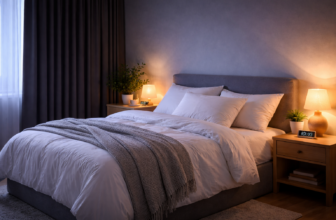
The free stuff comes first and works better. Dim the room for the last hour before bed, lamps instead of overheads. Keep the phone dim and at a distance, or better, bore yourself off it. Keep wake time consistent so your clock has an anchor. Get bright light in the morning, which does more for your rhythm than any evening gadget. Our evidence-based sleep tips cover the rest of that playbook.
If you like gear anyway, spend where the mechanism is sound. Red-shifted night lights exist because long wavelengths barely touch the melatonin system, we ranked our favorites in the red night light roundup. Darkness at sleep time still beats everything, our blackout curtains vs sleep mask comparison settles which tool blocks more of it. And the full room setup lives in our sleep environment guide.
Shop Red Night Lights on Amazon >
So should anyone buy the glasses?
Maybe shift workers and people stuck under bright office lighting late at night, where dimming the environment isnt an option. Thats the one scenario where filtering at the eyeball makes some sense, and even there the evidence is thin. For everyone else, a $90 pair of amber lenses is solving a problem your dimmer switch solves free. The wavelength story was never fake, it just got stretched into a product category the data doesnt support. Sleep myths have a habit of doing that, we collected the greatest hits in 9 sleep myths the science disagrees with.
Disclosure: Some links in this article are affiliate links. We may earn a commission at no extra cost to you.
As an Amazon Associate, we earn from qualifying purchases.