


Weighted Blankets: Do They Actually Help You Sleep? What the Science Says

What You Need to Know
Weighted blankets went from a niche therapy tool to a mainstream sleep product almost overnight. They’re now one of the most-searched sleep accessories on Amazon, with brands claiming they reduce anxiety, help you fall asleep faster, and improve sleep quality. But do they actually work, or is it just a cozy placebo effect?
Let’s dig into what the research actually says, and who benefits most.
The concept behind weighted blankets is called deep pressure stimulation (DPS), the same principle used in therapeutic techniques like firm hugging, swaddling infants, and compression garments. The evenly distributed weight (typically 10 to 25 pounds) creates gentle, constant pressure across your body.
This pressure triggers several physiological responses:
Think of it as a full-body hug that lasts all night.
The scientific evidence for weighted blankets has grown noticeably in recent years, and the results are more positive than skeptics expected.
Picking A Weight Without Guessing
The rule everyone repeats is roughly 10 percent of bodyweight. Its a reasonable starting point and not much more than that. In practice people who run warm or feel penned in do better a size down, and people who already sleep under a heavy duvet often want a size up. A 150 pound sleeper lands on 15 pounds by the formula, but 12 is the safer first buy if you’ve never used one.
Glass beads over plastic pellets. Beads are smaller and denser so the blanket sits thinner for the same weight, which matters a lot for heat. Pellet blankets are cheaper and lumpier and they shift into corners over time unless the quilting is tight. Look for pocket squares around 4 to 5 inches.
Heat Is The Reason Most People Give Up
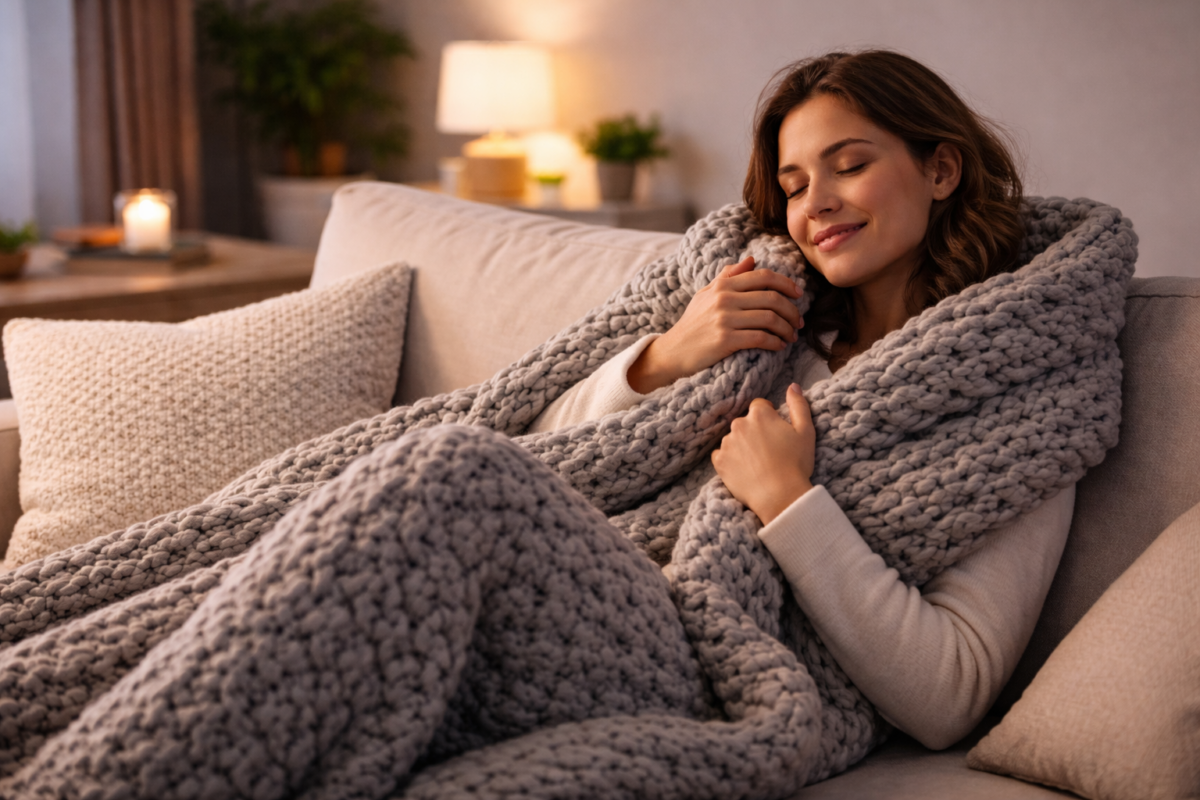
More material means more insulation. Thats unavoidable. Cooling covers made from bamboo viscose or a knit weave help genuinely, and the chunky knit style blankets breathe far better than a quilted shell, though they cost more and stretch out. If you already sleep hot, buy a knit or dont buy one.
Two people, one blanket doesnt really work either. Weight distributes toward whoever moves less, so one of you ends up dragging it back all night. Separate blankets or skip it.
Who Should Not Use One
Anyone with sleep apnea, restricted breathing, circulation problems or limited mobility should check with a doctor first. Same for kids under a couple of years old, where the guidance is simply no. This is the one place a disclaimer earns its keep.
The research is honestly mixed on sleep quality and much stronger on anxiety, which lines up with what people report. It calms you down, and calm makes falling asleep easier. That chain is real even if the direct sleep data is thin. If anxiety at bedtime is your issue, the sleep hygiene checklist pairs well with it, and our melatonin vs magnesium piece covers the supplement side.
Final Verdict
Disclosure: Some links in this article are affiliate links. We may earn a commission at no extra cost to you.